
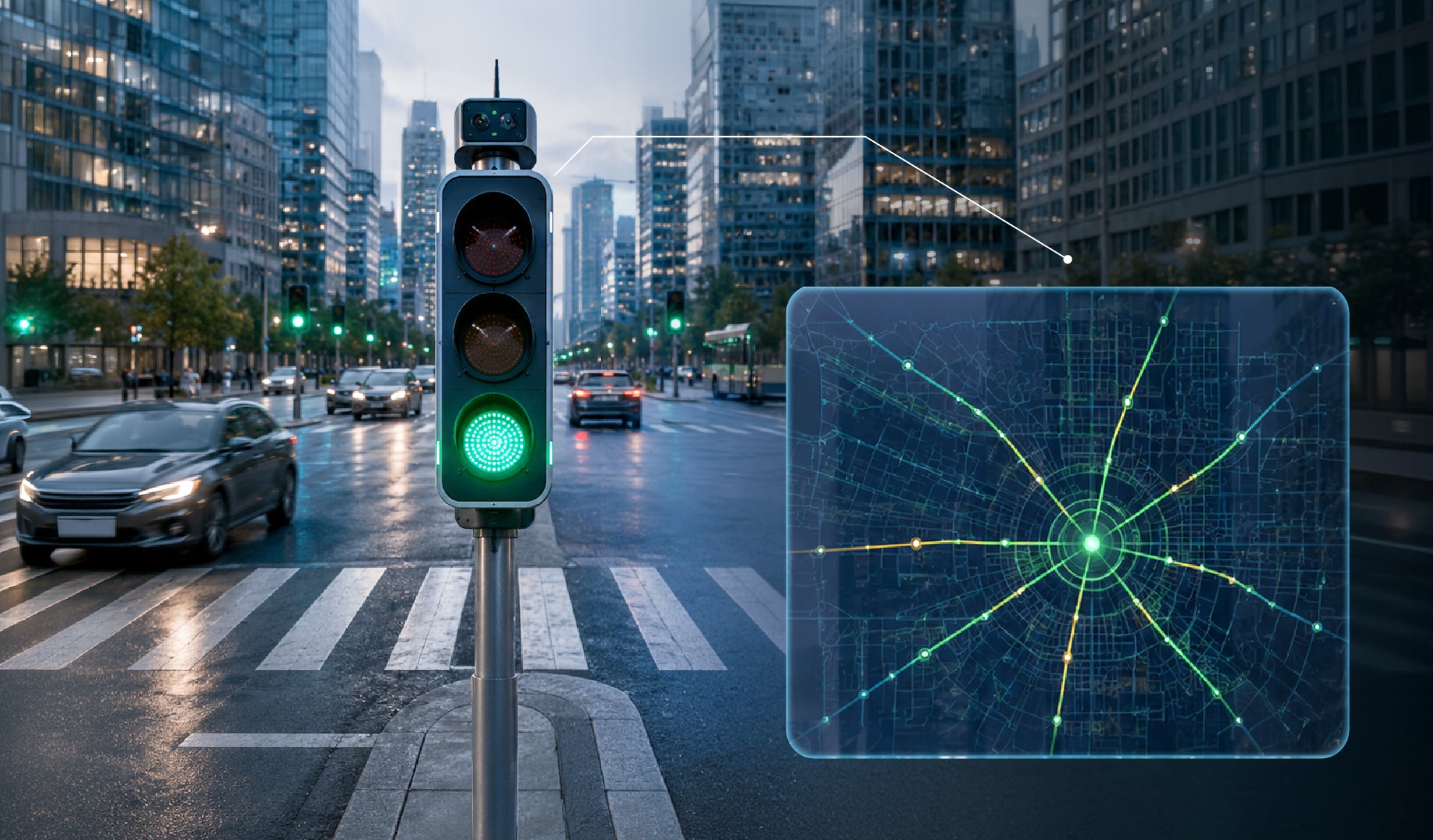
Physical AI represents a new generation of intelligent systems that can perceive, interpret, and adapt through continuous interaction with the physical world. While intelligent devices have long been able to sense and respond to their environments, Physical AI marks a shift toward systems that continuously interpret real-world signals and contextual feedback, adapting their behavior as conditions change. Physical AI is not defined by its ability to sense the world, but by its ability to continuously adapt to it.
This shift is being driven by a growing demand for intelligent systems that can operate effectively in dynamic, unpredictable environments. From smart home devices and audio systems to industrial equipment and robotics, AI is increasingly moving beyond the analysis of digital information and into the realm of real-world interaction. These systems must do more than recognize events or execute predefined responses—they must understand context, make decisions in real time, and adjust to changing conditions.
Physical AI does not replace cloud-based AI or the data center. Instead, it is accelerating a more distributed model of intelligence in which cloud-scale training, orchestration, and reasoning work alongside real-time sensing, inference, and adaptation at the Edge. As intelligence moves closer to where physical interactions occur, devices can respond faster, operate more efficiently, preserve privacy, and deliver more context-aware experiences.
From Edge AI to Physical AI
The shift to Physical AI is not incremental—it reflects a fundamental change in how intelligent systems are built and deployed.
Physical AI is emerging at a time when advances in cloud-scale AI and Edge Computing are converging. The datacenter has become extraordinarily effective at training, orchestrating, and refining intelligent models, while Edge devices have gained the sensing, processing, and connectivity capabilities needed to apply that intelligence in real-world environments. Together, these advances are enabling a new generation of systems that can not only understand information but also interact with and adapt to the physical world.
Consider a modern city as it evolves throughout the day. Traffic flow shifts from morning commutes to lunchtime activity and evening rush hour, while weather conditions, public events, roadworks, accidents, and infrastructure issues continuously alter how people and services move through the city. Sensors embedded in traffic systems, public infrastructure, and city services continuously measure the conditions around them, creating a constant stream of information that is interpreted both locally and across the broader transportation network. Traffic signals adjust their timing, transit systems respond to changing demand, maintenance teams are dispatched when issues arise, and city-wide systems continuously adapt to help people, services, and infrastructure move safely and efficiently through changing conditions. Together, they form a distributed intelligence system that continuously adapts as the city evolves.
Physical AI brings a similar capability to intelligent systems. Rather than simply sensing and responding to predefined conditions, Physical AI enables devices to continuously interpret real-world signals, understand context, and adapt their behavior as environments change. This shift is especially important in dynamic settings where every possible condition cannot be anticipated or programmed in advance.
Physical AI builds on advances in Edge AI by combining multimodal sensing, local AI inference, and low-latency, reliable connectivity into a continuous feedback loop. By integrating signals from multiple sources and interpreting them within context, intelligent systems can operate with greater autonomy, privacy, and responsiveness. Instead of relying solely on static inference or predefined responses, they can continuously adjust to dynamic, unpredictable environments.
Real-world environments are inherently variable, and pre-trained models alone cannot account for every condition a device may encounter. Physical AI addresses this challenge by combining multimodal sensor inputs with real-time inference and contextual feedback. By incorporating physical signals directly into the decision-making process, intelligent systems can continuously refine their responses and operate more effectively in changing conditions.
Physical AI is not simply an extension of Edge AI—it represents a new baseline for intelligent systems, where adaptation, not just inference, becomes the defining capability. Physical AI is most effective when architected into the system by design, integrating sensing, inference, connectivity, and adaptation into a continuous feedback loop rather than treating them as standalone capabilities.
Adapting to Real-World, Unpredictable Environments
Even the most advanced city infrastructure cannot predict every condition that may emerge throughout the day. Traffic patterns shift unexpectedly, weather conditions change, public events alter how people move through the city, and incidents can disrupt normal operations without warning. Success depends not on following a fixed plan, but on continuously interpreting new information and adapting as conditions evolve.
Intelligent systems face a similar challenge. Engineers can design for known conditions and anticipated scenarios, but real-world environments are inherently dynamic. No model, rule set, or training dataset can account for every variable a system may encounter once it begins operating in the physical world.
Physical AI is not about eliminating pre-programmed intelligence. It is about enabling intelligent systems to operate effectively when reality deviates from the conditions they were designed to expect. By combining multimodal sensing, contextual awareness, and real-time inference, intelligent systems can adapt their behavior as circumstances change.
As connected devices and autonomous machines interact with the world, they encounter information and conditions that cannot be fully captured in a lab, simulation, or training dataset. The ability to interpret and respond to these previously unseen situations creates new opportunities for smarter, more resilient, and more capable intelligent systems operating in the physical world.
Turning Perception into Adaptation
The true value of Physical AI emerges when intelligent systems move beyond perception and begin adapting their behavior based on context. Whether in smart homes, audio systems, or autonomous and collaborative machines, the ability to continuously interpret changing conditions and respond accordingly enables a new generation of more capable, resilient, and intelligent systems.
In smart homes, intelligent systems can move beyond simple event detection and automation. Connected cameras, hubs, and other intelligent systems can continuously interpret environmental signals, occupancy patterns, and changing household conditions to better understand context and adapt their responses. By combining embedded AI processing with low-latency wireless connectivity and multimodal sensor inputs, these systems can make faster, more informed decisions while improving privacy and responsiveness.
Physical AI is equally transformative in audio systems. Low-power, always-on audio intelligence enables devices to recognize meaningful acoustic cues, distinguish relevant speech from background noise, and adapt to changing listening environments. Whether in conferencing systems, headsets, or smart audio endpoints, the result extends beyond better sound quality to more natural interactions through a deeper understanding of user intent and context.
Physical AI is also accelerating advances in autonomous and collaborative machines. Humanoid robots, non-humanoid robots, and collaborative robots (cobots) must continuously interpret information from vision, audio, motion, touch, and other sensory inputs while operating in environments that cannot be fully predicted in advance. By combining multimodal sensing, contextual awareness, and real-time inference, these systems can adapt their behavior to changing conditions, work more effectively alongside people, and navigate the complexity of the physical world.
Why Physical AI Drives Adaptability at the Edge
As intelligent systems move beyond interpreting information and begin interacting directly with the physical world, the ability to adapt becomes increasingly important. Physical AI represents a shift from systems that simply recognize events to systems that continuously understand context, respond to change, and operate effectively in dynamic environments. The next generation of intelligent devices will be defined not only by what they can sense, but by how effectively they can adapt.
This evolution is driving a more distributed model of intelligence in which cloud-scale AI works alongside real-time sensing, inference, and adaptation at the Edge. As intelligent systems become more integrated into homes, workplaces, industries, and everyday life, the ability to continuously interpret and respond to changing conditions will become a defining characteristic of successful products and experiences. Equally important will be their ability to understand and adapt to the people around them, enabling more natural, intuitive, and effective interactions between humans and intelligent machines.
At Synaptics, we believe the next frontier of the Intelligent Edge will be defined by systems that combine awareness, responsiveness, and adaptability by design. As Physical AI continues to evolve, the opportunities for creating more capable, responsive, and human-centric intelligent systems are only beginning to emerge.